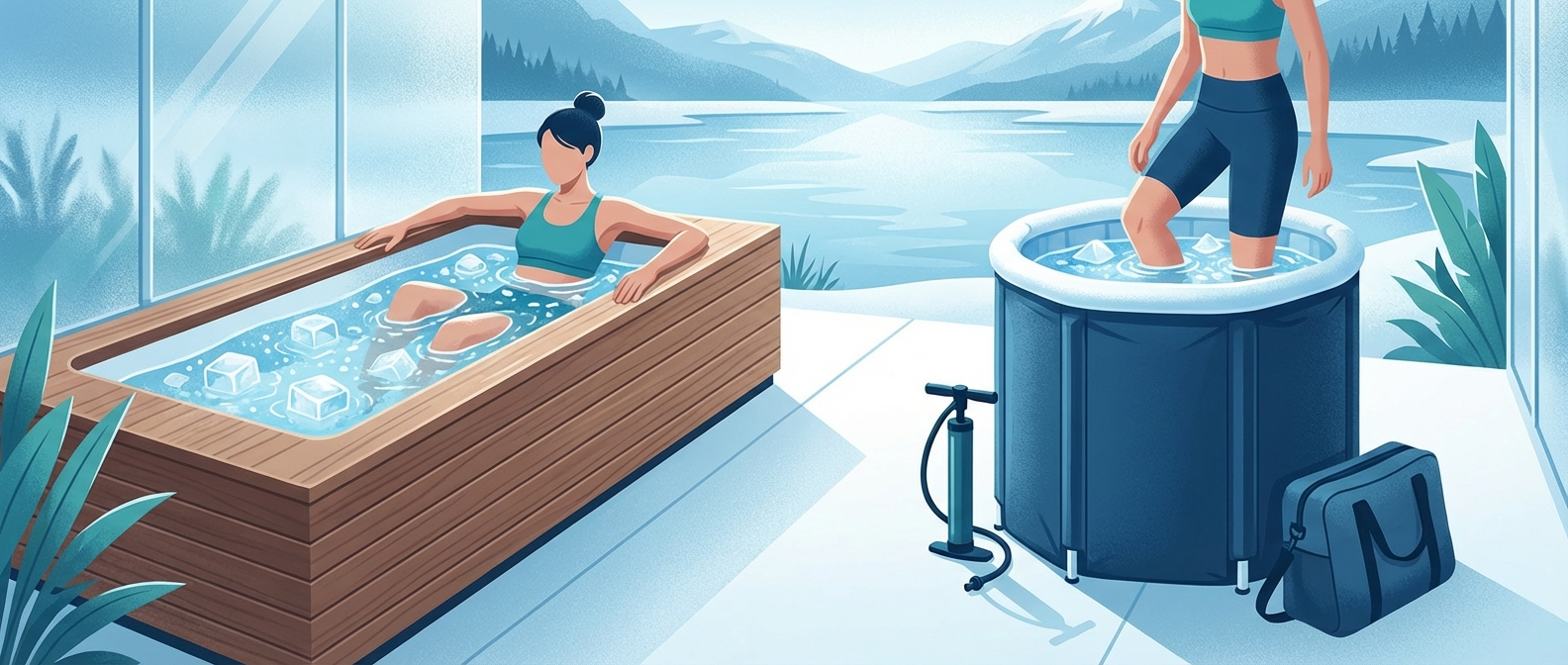
What's the Real Difference Between a Cold Plunge and an Ice Bath?
If you've spent any time in the cold therapy world, you've probably heard the terms "cold plunge" and "ice bath" used interchangeably. They're not the same thing — and the distinction matters more than most people realize. Both methods immerse your body in cold water to trigger the same family of physiological benefits: reduced inflammation, faster muscle recovery, improved mood, and sharper mental focus. But how you get there, how cold it gets, and how consistent the experience is differ significantly between the two.
The short version: a cold plunge is a purpose-built system with mechanical cooling and precise temperature control; an ice bath is a DIY setup using a tub and bags of ice. One is engineered for repeatability, the other is cheap and accessible. Neither is inherently superior — the right choice depends on your goals, your budget, and how seriously you plan to take cold therapy long-term.
This guide breaks down every meaningful difference so you can make an informed decision rather than just going with whatever you read about first.
Temperature: The Most Important Variable in Cold Therapy
Temperature is where the cold plunge vs ice bath debate gets genuinely interesting — and where the science starts to matter.
Cold Plunge Temperature Range
Purpose-built cold plunge tubs typically maintain water between 37°F and 55°F (3–13°C), with the user setting their preferred temperature via a thermostat. That precision is a significant advantage. You can dial in 50°F for a gentler session, or push it down toward 39°F for something that hits harder. The temperature stays stable throughout your session, meaning the physiological stimulus is consistent from minute one to minute ten.
Ice Bath Temperature Range
Ice baths run colder on the low end — often hitting 33–39°F (1–4°C) when freshly loaded with ice — but they're inconsistent by nature. The water warms as the ice melts, meaning your first two minutes feel brutal and your last five minutes are considerably milder. That temperature drift isn't just uncomfortable; it undermines the consistency that makes cold therapy effective as a repeatable practice.
Why the Numbers Matter
Research published in Frontiers in Physiology indicates that cold water immersion at temperatures below 15°C (59°F) is generally required to achieve meaningful therapeutic benefits for muscle recovery and inflammation reduction. Both ice baths and cold plunges comfortably hit that threshold. The practical edge goes to cold plunges because they hold that temperature reliably — ice baths do too, but only briefly before the melt begins.
| Feature | Cold Plunge Tub | Traditional Ice Bath |
|---|---|---|
| Typical Temperature Range | 37–55°F (3–13°C) | 33–39°F (1–4°C) |
| Temperature Consistency | Stable throughout session | Rises as ice melts |
| Startup Cost | $500–$10,000+ | $5–$30 (ice bags) |
| Setup Time | Ready on demand | 30–60 minutes to chill |
| Filtration | Built-in (most models) | None — water discarded after use |
| Intensity for Beginners | More manageable | Higher shock factor |
| Long-term Convenience | High | Low |
Setup, Cost, and the Friction That Kills Habits
This is where most people underestimate the cold plunge vs ice bath debate. The cheapest cold therapy is the one you'll actually do consistently — and friction is the silent killer of cold therapy habits.
The Ice Bath Reality
An ice bath is genuinely cheap to start. You need a bathtub or large container and ice — that's it. A bag of ice costs a few dollars. If you're testing cold therapy for the first time or using it occasionally after hard training sessions, an ice bath makes complete sense. There's no capital investment, no maintenance, and no learning curve.
The downside becomes apparent when you try to build a daily habit. You need to source ice regularly, wait 30–60 minutes for the water to chill properly, and then drain and refill after every session. In summer heat, that waiting time gets even longer. The logistical overhead adds up, and for most people, it's the reason their ice bath practice fades out after a few months.
The Cold Plunge Investment
Cold plunge tubs eliminate that friction entirely. They're ready when you are. Models like the Plunge Original maintain your set temperature around the clock, with built-in filtration that keeps the water clean for weeks between changes. You step in, you get out — no prep, no cleanup beyond a quick rinse. That convenience is what converts occasional cold dippers into daily practitioners.
Newsletter
Get the latest SaaS reviews in your inbox
By subscribing, you agree to receive email updates. Unsubscribe any time. Privacy policy.
The trade-off is cost. Entry-level units like the Ice Barrel 500 offer a middle ground — no active chilling system, but a well-insulated barrel that holds cold water effectively and costs significantly less than motorized plunge tubs. At the higher end, units like the Morozko Forge offer serious performance with precise chilling and industrial-grade filtration. The right pick depends on your commitment level and budget.
The Hidden Cost of Ice
If you're doing ice baths daily, the ongoing cost of ice adds up faster than people expect. A meaningful ice bath requires several bags of ice per session. At $3–5 per bag, and using 3–4 bags each time, a daily ice bath habit costs $300–$600 per month in ice alone. A cold plunge tub becomes financially competitive surprisingly quickly when you factor in that running cost.
Physiological Benefits: Are Ice Baths and Cold Plunges Actually Different?
Here's the honest answer: the core benefits are essentially the same. Cold water immersion — whether from ice or a mechanical chiller — triggers the same physiological chain reactions. The difference is in the consistency and reliability of the stimulus, not the mechanism.
Shared Benefits of Cold Water Immersion
The research base for cold water immersion broadly supports:
- Faster muscle recovery and reduced delayed onset muscle soreness (DOMS) after intense training
- Reduced systemic inflammation through vasoconstriction and subsequent vasodilation
- Improved mood and reduced anxiety via norepinephrine and dopamine release
- Enhanced mental focus and clarity from acute sympathetic nervous system activation
- Stress resilience built through regular voluntary exposure to controlled discomfort
- Potential metabolic benefits through activation of brown adipose tissue
Full Immersion: The Advantage Both Share Over Cold Showers
Both ice baths and cold plunges achieve something a cold shower cannot: full-body immersion. When you submerge to the neck, cold water contacts all muscle groups simultaneously and creates hydrostatic pressure around the body. This uniform exposure activates the vagus nerve more effectively than partial cold exposure, driving a stronger parasympathetic response that's associated with deeper recovery and relaxation. A cold shower hits different surfaces at different times — your back might be cold while your chest stays warm. That uneven exposure limits the systemic response significantly.
Where Cold Plunges Have an Edge
The advantage of a dedicated cold plunge over an ice bath isn't in the mechanism — it's in repeatability. A well-calibrated cold plunge delivers the same stimulus every session. An ice bath is variable by nature: how much ice you used, how long you waited, how warm the tap water was. Over weeks and months, that consistency compounds. Users who plunge daily at a stable temperature adapt more predictably and can track their progress more accurately than those using ice baths with fluctuating temperatures.
Units like the Sun Home Cold Plunge Pro take this further with digital temperature displays and filtration systems that maintain water quality, removing one more variable from the equation. For serious practitioners, that level of control isn't a luxury — it's the difference between a genuine protocol and a rough approximation of one.
Cold Plunge vs Ice Bath vs Cold Shower vs Cryotherapy: The Full Spectrum
Once you understand the cold plunge vs ice bath distinction, it's worth situating both methods within the broader cold therapy landscape.
Cold Showers
Cold showers are the most accessible entry point, requiring nothing beyond what you already have. But they're limited: shower temperatures typically range from 50–70°F (10–21°C), depending on your location and season. You're constrained by whatever comes out of your tap, which often can't hit the sub-59°F threshold that research identifies as necessary for meaningful therapeutic effects on muscle recovery. Cold showers are better than nothing — they build mental toughness and provide mild mood benefits — but they shouldn't be confused with a substitute for full immersion cold therapy.
Cryotherapy
Whole-body cryotherapy takes a completely different approach: instead of cold water, a chamber uses liquid nitrogen to cool air to extreme temperatures (sometimes below -200°F/-130°C) for 2–3 minutes. The session is shorter, your skin gets extremely cold very quickly, and you leave dry. Athletes use it for rapid post-competition recovery, and it does effectively reduce inflammation and soreness.
The limitations are significant, though. Cryotherapy only chills the skin surface — it doesn't create the deep tissue cooling or hydrostatic pressure effects of water immersion. It requires traveling to a facility and paying per session. And the physiological mechanisms differ enough from water immersion that comparing the two directly is somewhat misleading. For day-to-day wellness and recovery, water immersion remains the more evidence-backed and accessible approach.
Which Method Should You Actually Choose?
Stop treating this as a binary decision and think about where you are in your cold therapy journey.
Start With an Ice Bath If...
You're new to cold therapy and want to test whether it's something you'll actually stick with before committing real money. An ice bath is the lowest-friction way to find out if cold immersion is for you. Use your bathtub, buy a few bags of ice, and spend two weeks doing sessions before deciding anything. If you're consistent and want more, that's the signal to invest in dedicated equipment.
Upgrade to a Cold Plunge If...
You've validated the habit and want to take it seriously. Daily practitioners almost universally find that the convenience of a purpose-built plunge tub transforms their consistency. If you're doing cold therapy for performance — not just curiosity — the precision and repeatability of a dedicated unit pay dividends over time.
For those looking for a balance of performance and value, the Nordic Wave Viking Gen 2 offers mechanical chilling with a competitive price point. If you want the most feature-rich experience available, the Plunge All In sits at the top of the category with integrated heating, cooling, filtration, and app control — a serious investment for serious practitioners.
The Honest Take on Ice Baths
Ice baths get unfairly dismissed in the cold plunge marketing ecosystem, largely because ice bath companies don't have marketing budgets. The truth is that an ice bath at 36°F provides the same physiological stimulus as a cold plunge at 36°F. The cold doesn't know what container it came from. What ice baths lack is convenience, consistency, and the ability to sustain a daily practice without significant ongoing effort. Those are real limitations — but they don't make ice baths ineffective. They make them impractical for long-term commitment.
If you're building a genuine cold therapy practice, the goal is progressive adaptation over months and years. That kind of long-term consistency is where a purpose-built cold plunge tub earns its cost. The ice bath gets you started — the cold plunge keeps you going.
Final Verdict: Cold Plunge vs Ice Bath
The physiological benefits of cold water immersion don't care about the delivery mechanism. Both ice baths and cold plunges work. The question is which one you'll actually use — consistently, over time, with enough precision to adapt and progress.
Ice baths win on cost and accessibility. Cold plunges win on convenience, consistency, and long-term sustainability. For most people building a serious cold therapy habit, the journey starts with an ice bath and ends with a dedicated cold plunge tub once the habit is proven and the investment is justified.
The worst outcome isn't choosing the "wrong" method — it's overthinking the comparison and never starting. Get in the cold. Adjust from there.